Catching up with the passing year

My desktop is covered in photos I was saving to share, stories I meant to tell. The end of the year is like this, sifting though all the things that seemed important or had potential, trying to remember what we saw in them. So here we are.
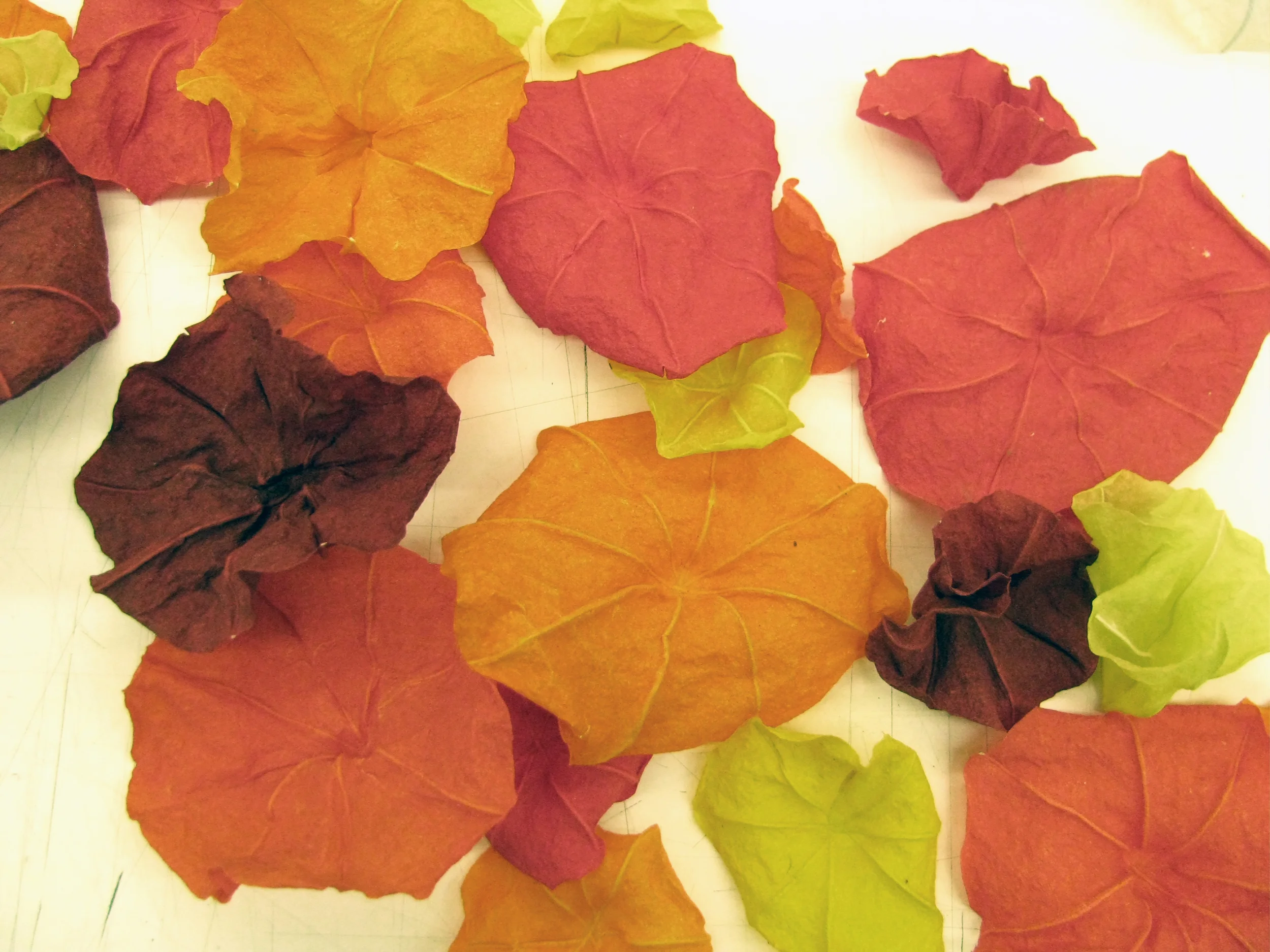
handmade paper flowers by allison milham
Home again on a night as someone offered me a ticket out but I've just been so tired. End of the year slight sickness and balancing going out and staying in, sharing and saving for yourself.

goodies from Taylor of Baskerville
So here are some nice things other people made. Now I am going to sleep. And then tomorrow I will get back to work.
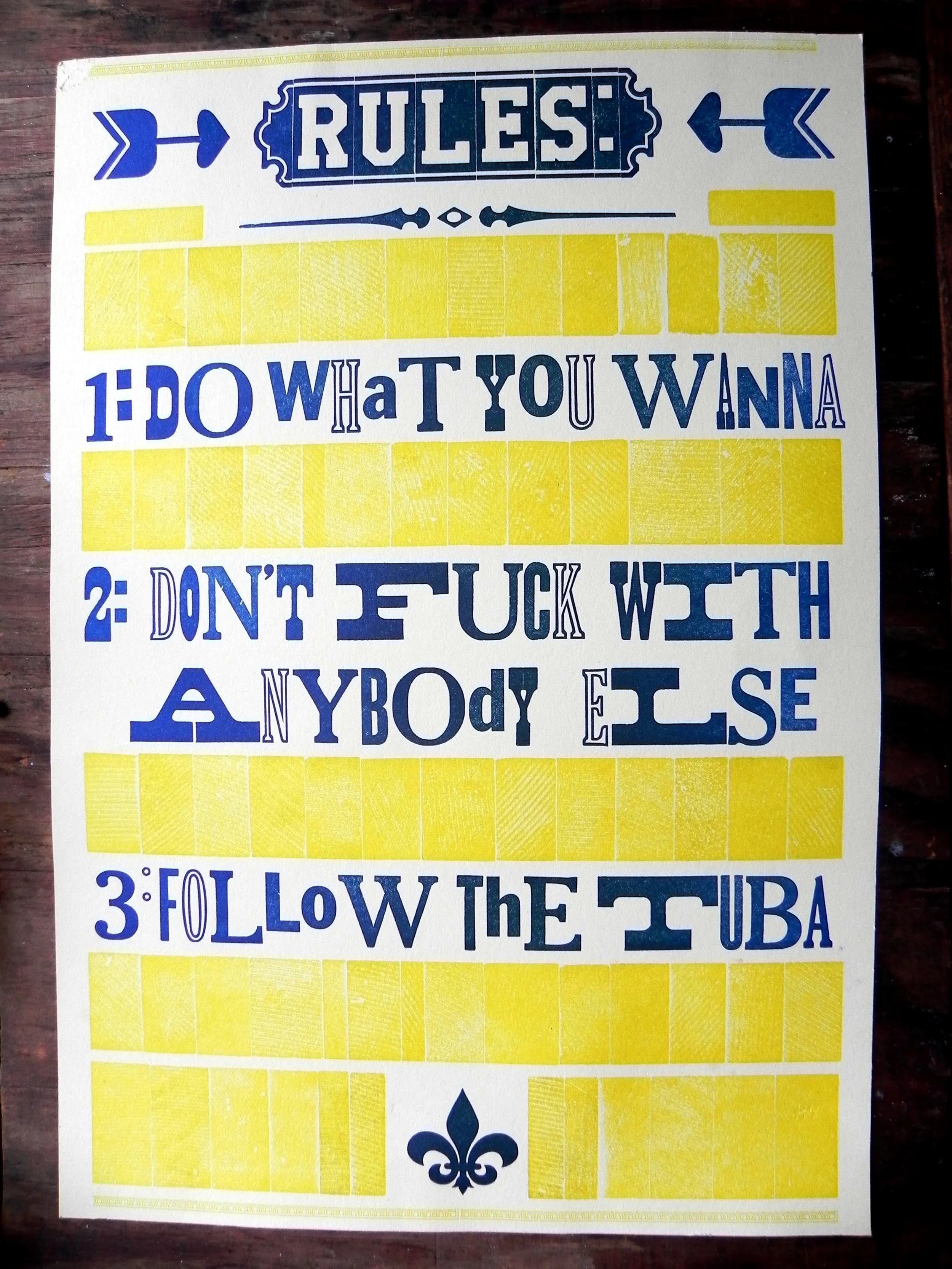
the rules/no rules from Taylor of Baskerville
Where I'm From
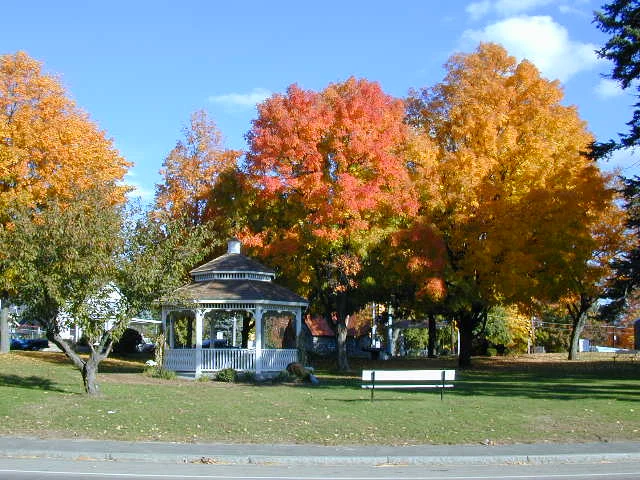
Hudson NH. I really grew up in a town that looks like this.
I write about a zine about hometowns, leaving and staying. This is about my hometown.
I grew up mostly in a small town near a city in a state most people can't distinguish from its neighbors. I grew up an hour from Boston but with little public transportation, we were not near the city. Driving there was easy, we were ten miles or less from the highway that cut from Boston to the fall foliage of the White Mountains. As a kid, I rode my bike alone on Saturday mornings, in 3 mile loops from my house, to the dairy farm, to the building where I went to kindergarten and then home. I stayed home alone in the summer. I walked alone in the woods in the fall and winter. We had disparaging names for drivers from Massachusetts, and considered Maine the place for a vacation.
I grew up thinking “Live Free or Die” belonged on a license plate, and did not know what kind of fury and privilege it entailed. I lived in a safe, quiet town, mostly white, mostly christian, fairly conservative in that special NH way. It's why the libertarians moved there years after I left. Independent because we could afford to be.
In the summer of 1989, I was ready to enter 7th grade. On August 3rd, a few blocks away from my middle school, a Hudson Police SWAT team acted on a tip, fueled by the urgency and money the War on Drugs gave police forces in the 80's, and busted into an apartment of an alleged drug dealer. They found Susan Lavoie asleep on the couch, her husband and two of their three kids asleep in the bedroom. Believing that Bruce Lavoie was a marijuana dealer and therefore potentially armed and dangerous, they entered forcibly, with guns drawn, shields up, and shot and killed Bruce Lavoie. The officer responsible, Stephen Burke, later claimed he did not recall discharging his weapon, first in the hall then in the bedroom. And, unsurprisingly, only trace amounts of drugs were found, indicating a guy who might like to get high but was in no way a major distributor.
I remember the newspaper stories in the Nashua Telegraph, feeling a vague sense of terror but I don't remember talking to my mom or dad or friends about it. It was a thing that happened, far away from me, yet a mile from my school. It was like the teacher who got arrested in the park that year for indecent exposure, and then resigned. A story I didn’t understand that no one explained. A month later, school started and I was probably worried about math classes and crushes and how to avoid gym class.
I had forgotten about this story, even as I was searching for some connection between what is happening now in the streets of major cities and what happens where I came from. I was searching to find a recent connection between New Hampshire and the rest of the country. And there it was—not just my home state but a story I remember. The first time I realized the cops could just come in your house and they could be wrong, so wrong, and someone could die. And nothing would be done.
Well, almost nothing. The Hudson SWAT team was disbanded for 2 years. Susan Lavoie sued the city for damages and received money for herself and her sons, much to the disappointment to many residents who believed she asked for too much. The officer, Stephen Burke, resigned but was hired by another unnamed police force. Two citizens, unconvinced by the newspaper reporting and internal investigation, conducted a private query “asking questions that should be answered and nobody was asking.” Despite this, indifference prevailed. Most people were inclined to believe that there must be some missing information to justify the officer’s actions.
People are angry because this shit keeps happening and mainly in black and latino communities. Police are given power, and somehow that goes unchecked. In the 1980's it was the alleged fear of the drugs the governement had flooded into the inner city that were leaking into to the suburbs and so a war was waged and police forces were outfitted with SWAT teams that knocked into homes with insufficient evidence, ignoring whatever information they may have had and killed a man. Bruce Lavoie was a white guy in a suburb town who was killed in an overambitious raid.
It is hard for me to imagine what it would’ve looked like if Bruce Lavoie was not white because I would have to reimagine my hometown. Ten years after his murder, the town census reported that 94% of residents were white. There were a lot of things I didn't understand about race and class and differences because of the homogeneity of my town. It is hard to look back and suppose what might be different. But the issue is still relevant . Because cops still raid houses and kill innocent people. Because deadly force is used over and over and over and justified because the victim was resisting while being held down and beaten, or might've been a drug dealer or had shoplifted or looked menacing (and to say that a person “looks menacing” if you're a cop in such a certain situation is an obvious indication of the your fear and unexamined racism that will remain,criminally, unexamined). Allegations of a misdemeanor offense should not end in death. I don't understand why there is even a question of whether or not there are “suspicious circumstances” when an unarmed citizen gets killed by a cop. That is suspicious. Always. But cops don't even get indicted . Sometimes they resign. Sometimes they feel threatened by angry citizens who want to know why their friends and family and community members are killed, harassed and terrorized by them. Nevermind the systematic oppression that brings about these circumstances. Or that when people march in the streets in outrage, they are faced with the same over-armed, righteous, aggressive forces they are protesting.
In the 1989-90 annual report for the town of Hudson, zero murders are reported, meaning Bruce Lavoie's death went unrecorded. Also in that report Hudson police congratulate themselves on the effectiveness of the DARE program, “daring” to keep kids off drugs. I was too old by one year to participate in the program at my middle school but my younger sister and her friends completed the program and started smoking weed around then. (I was part of the DARE dance committee mostly for the crushes and though I have never smoked pot, it wasn't fear but lack of interest that kept me sober for many years.)
A year after the murder, as a financial settlement was reached, the local paper interviewed residents to see if people even remembered the event. Ted Lambert (who may or may not have been a friend’s dad, there were a lot of Lamberts and Lavoies in Hudson), said about it “But it's not just Hudson---it could happen anywhere.” And that's it. Because it does happen anywhere. Which is why we still have to talk about it. We have to talk the systematic ways non-white people and poor folks are oppressed in this country. From schooling and police treatment, to the judicial system and jails, there is a trail that can lead to a bigger picture of the ways we fail our fellow citizens. Consider the ways the police use deadly force, misinformation and manipulation in the name of the war on drugs or the war on terror or the war on poverty. I wish I had this kind of analysis when I lived in NH , when I was 13 and angry and I thought my mom was unfair. But this is why we get out, to see a bigger picture, to understand more. To be angry and learn and talk and maybe maybe maybe maybe affect change that could reach to the corners of our home towns.

Hudson NH by race, 2000. The purple part are white people (94.3%) everyone else gets those slivers.
Where You From?
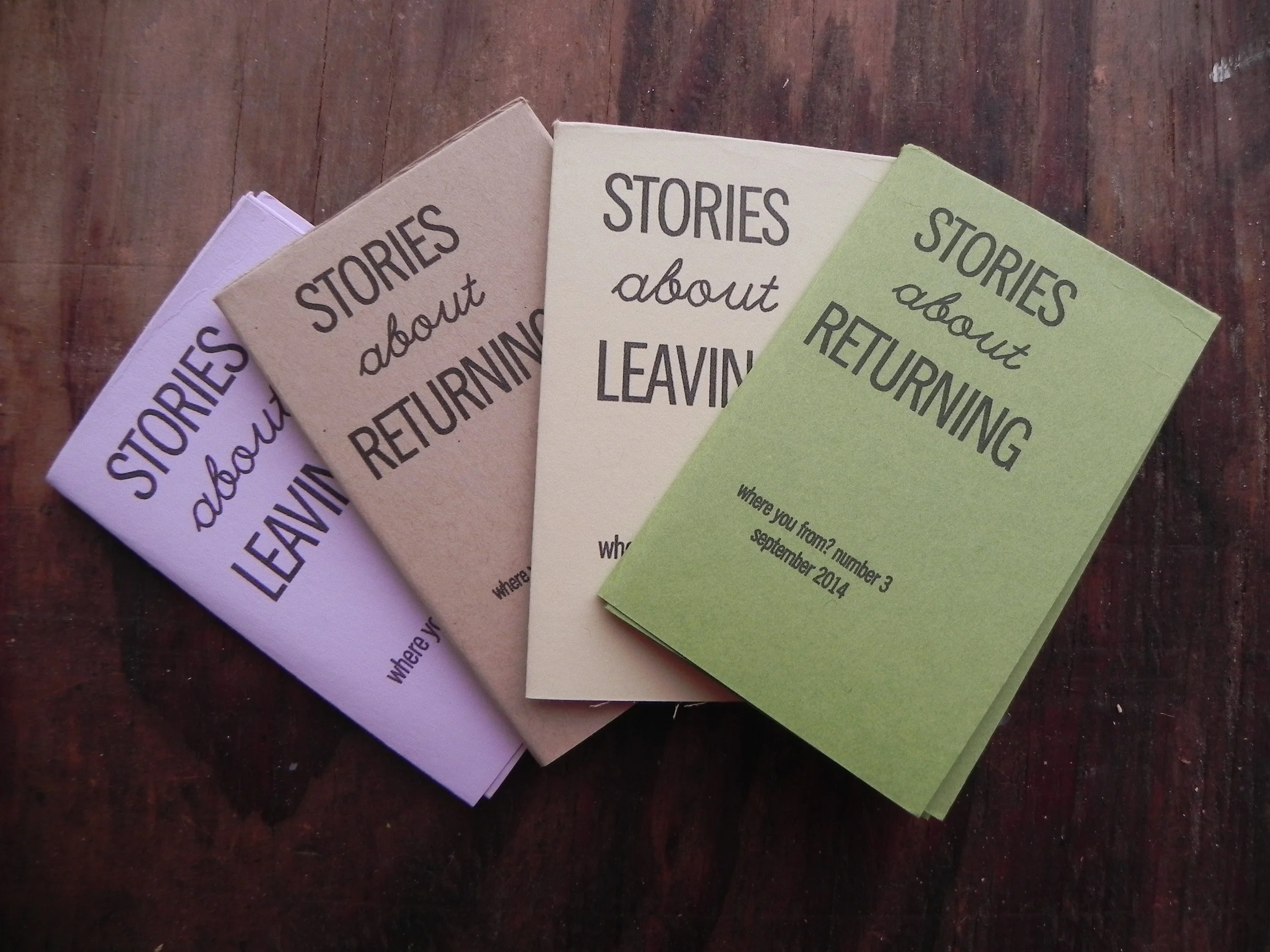
With everything that has been going on in Ferguson and in cities all over the country, it has been hard to sit and write about zines and postcards. I've been watching the news, reading, and trying to find constructive things to say. And sometimes I've just been angry and sad. But the work to do in this country is ongoing and so while it becomes less in the forefront in my mind, I work to keep these struggles part of my every day conversation, while talking about the things I make too.
When I moved to Baton Rouge, LA six years ago, I was struck by how many people I met who were from Louisiana, from Baton Rouge and other smaller towns. I had been living in big cities most of my life, leaving my home state at 20 and even then, I had moved twice within that state. I become interested in the ideas about why people leave their home towns and why they stay. I wanted to explore the benefits of leaving a place when you've outgrown it and the benefit of staying rooted in one place. In 2 issues, I asked friends and acquaintances, many from Louisiana, to write about their experiences. This comprised the first 2 issues of Where you from?
Then 2 years ago I moved to Oakland after spending 6 months in Italy. I had a bunch of ideas to connect, from traveling with my sister in Sicily, talking with my grandmother about her parents home towns in Sicily, moving out west with my partner, who had lived in Baton Rouge his whole life. I thought I would have a new zine soon--I've sketched out a huge project in my head, with maps and letterpress printing and so the project is still just ideas. I got so stuck on that project that it's been years since I've made a new issue. So here it is.
I wanted to make a zine with the instant book form because it offers a great structure for telling two sides of a story. And it meant I could letterpress print some for fun while still digitally printing affordable copies. I chose to write about leaving places I've lived and returning.
It was harder than I realized to write these. When I was done, I slept for a week and they sat on my computer, waiting to be turned into files to become plastic plates to print. They are short, and the form thwarts my proclivity for run on sentences. But here it is: one sheet of paper, ten stories. Mostly about New Hampshire and New Orleans. One or two you may have heard before , maybe not. but now they are in print in a copy that fits in your pocket.
*****Did you want a copy? They are all available in my etsy store and if you live in the Bay Area, I'll be at the EBABZ this Saturday with a table full of stuff. And if you want to hear me read from it along with a bunch of other great zine writers including artnoose, come to the EBABZ reading this Thursday here. Phew.
Take care of each other ok?
The Too-Busy Fail part 1
Oh dear. Sometimes I say yes and yes and yes to projects and ideas while scheming other projects and then realizing that maybe what I need is a nap or a walk in the park. And sometimes I completely fail to do something that was so exciting a few short weeks before.
In March, May Babcock of Paperslurry (side note #1: if you have any any any interest in handmade paper at all check out this blog. seriously. may does an amazing job compiling information and inestigations with lods of tips and how-to's. in fact, don't even bother with the rest of this blog, just go read hers) asked me if I would experiment with paper imported by Paper Connection International. Of course I said yes and dreamt of all the things I could do with samples of handmade paper.
Then my job tried to take over my life again and we decided to move and I got sick again, and so when I finally tried using the paper they sent, I foolishly fed it through the Heidelburg WIndmill with little adjustment or plan and printed a sample of a project I was working on (side note #2: that project come out all wrong too and I ended up scrapping 100 postcards which I have been using for list making for months. lesson: don't work while overtired. just don't). One sheet misfed, one was too light. I was given 4 different sheets of 8 1/2 x 11 inch paper and I fed them to the hungry Heidelberg. Finally, here are the results:
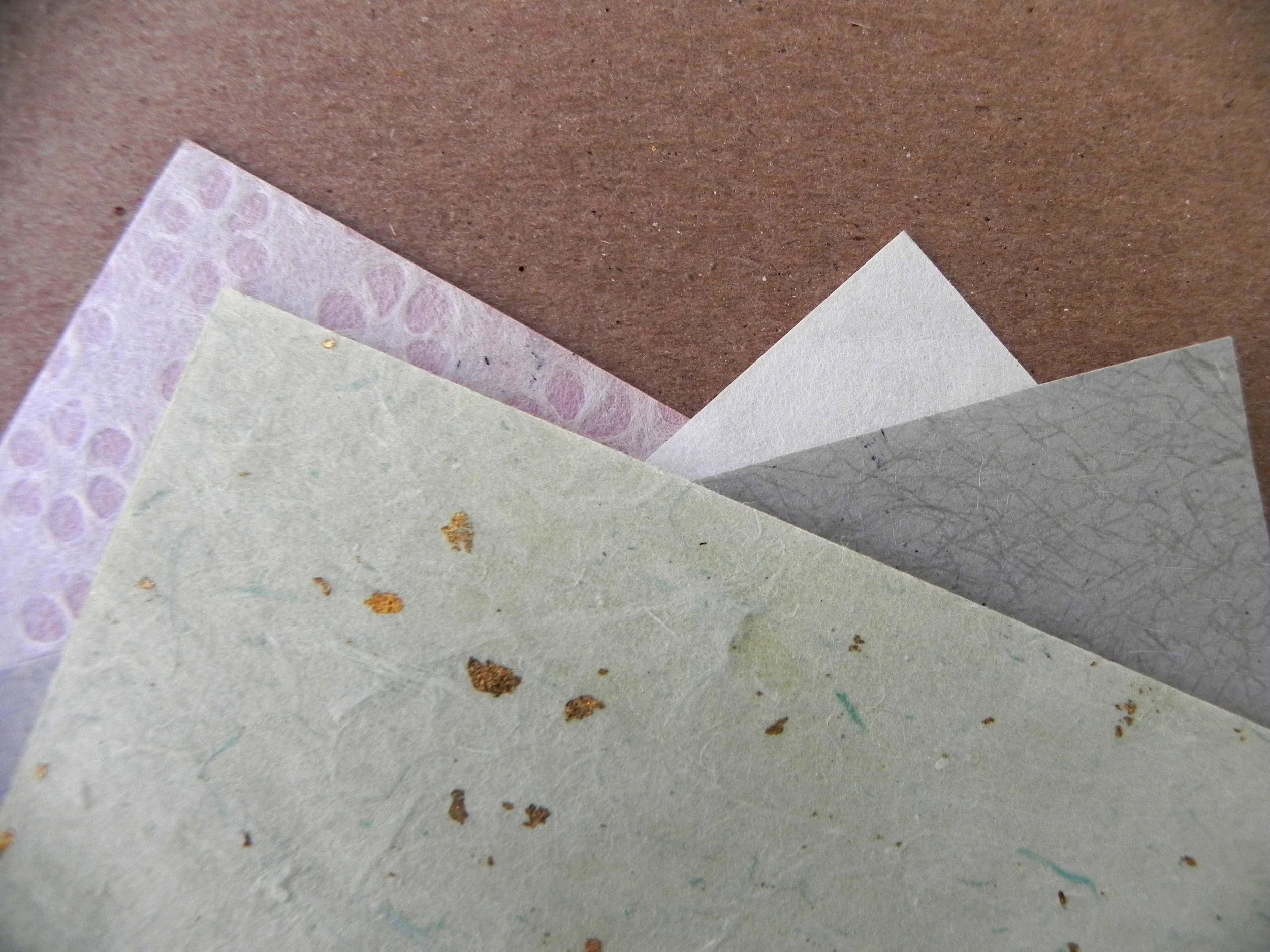
the paper sent to me from paper connection
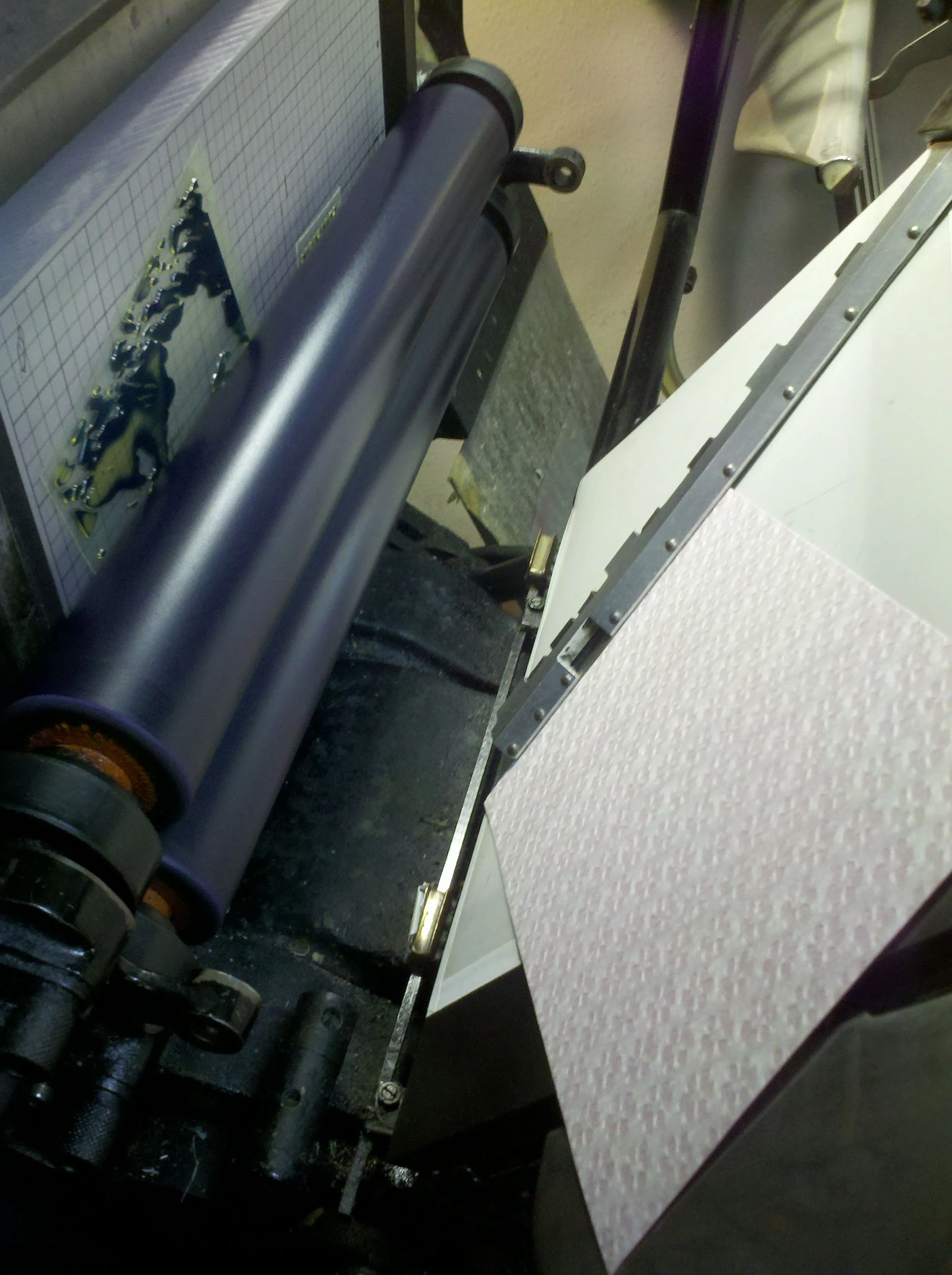
polymer plate printing and the machine that keeps eating
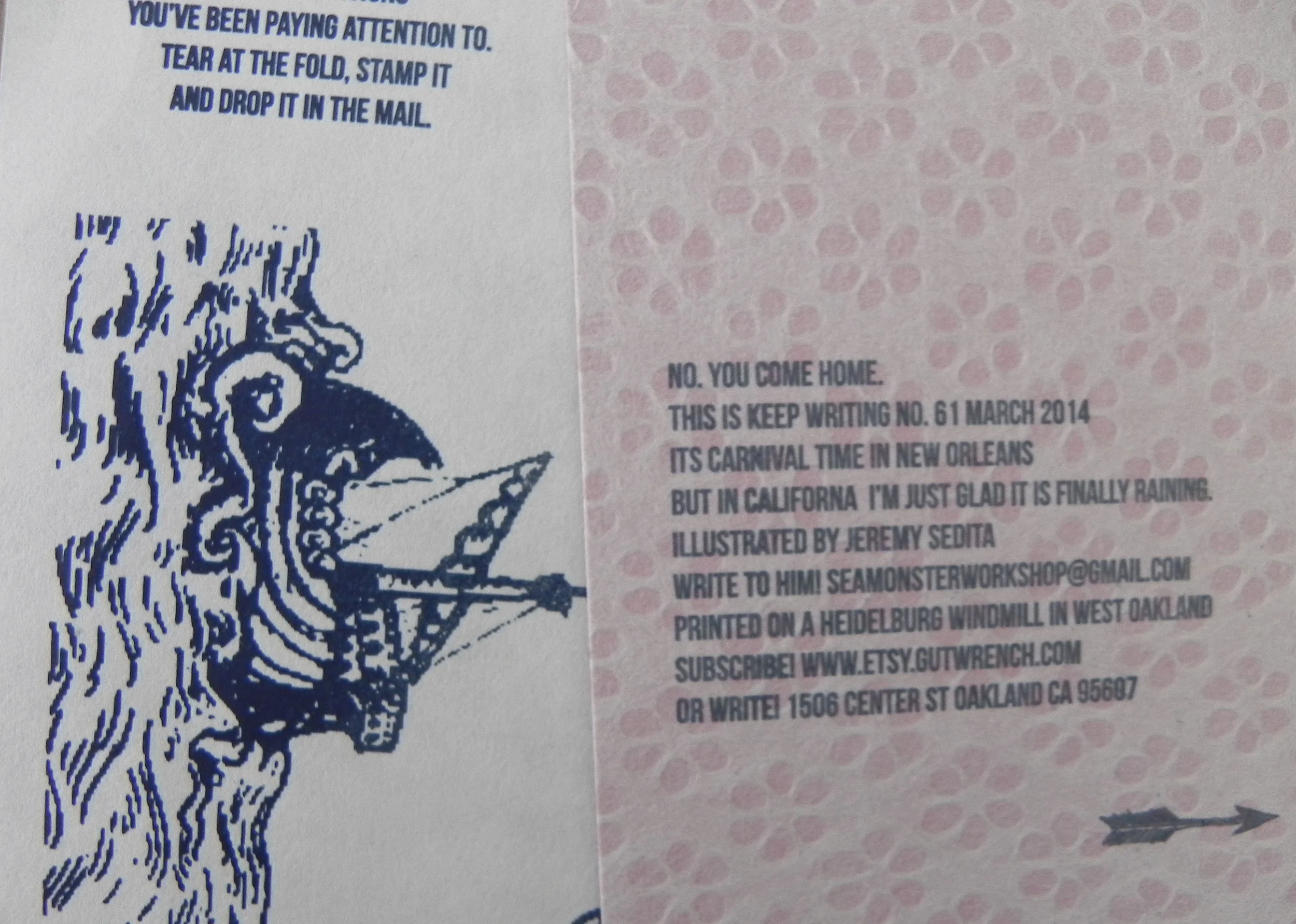
on the left: the image on french paper, on the right, a too-soft impression on the handmade
with thanks to may and paper connection, despite the unsuccessful experimentation on my part,
Seashells by the Seashore
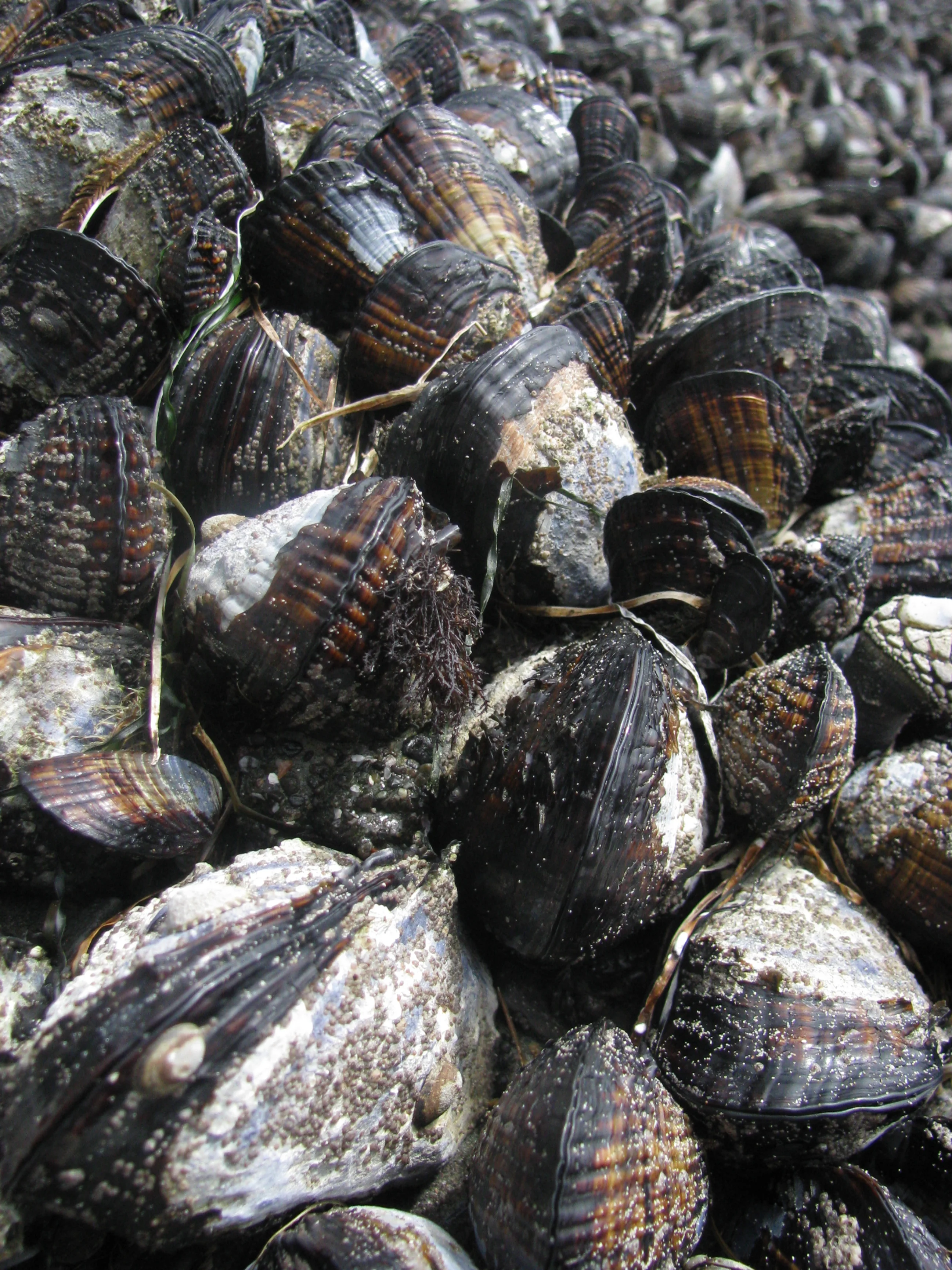
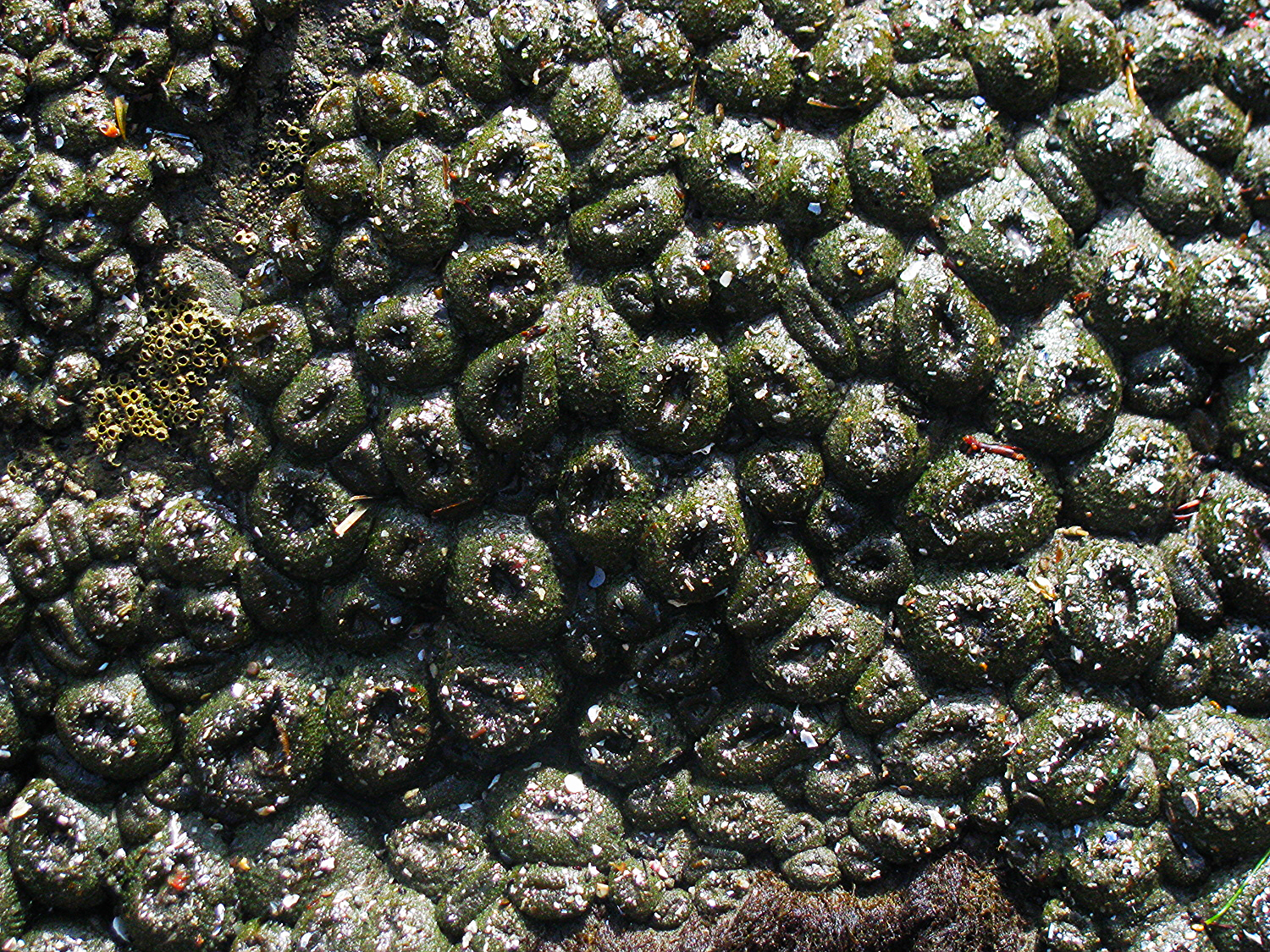
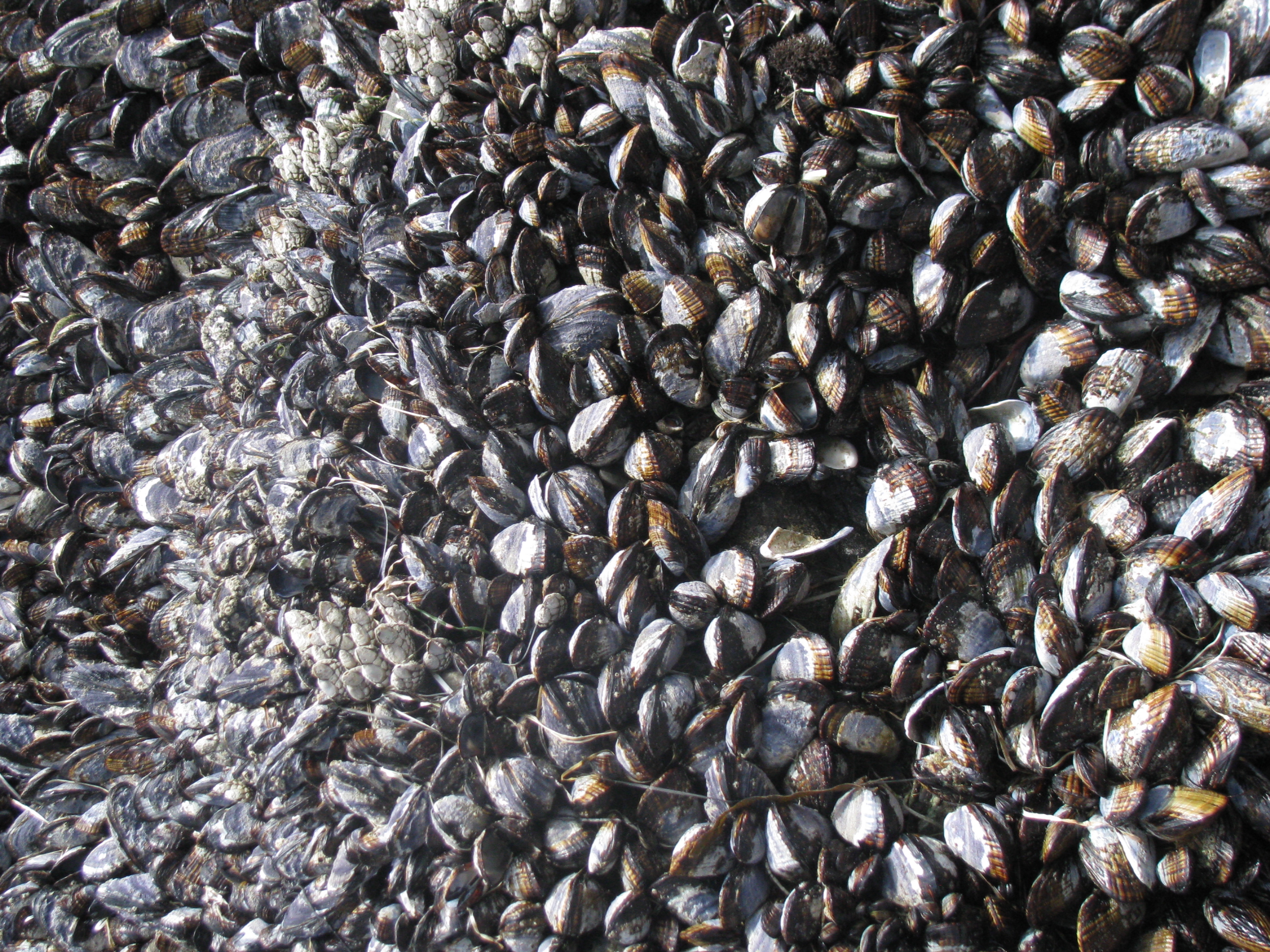
Between a new computer, which subsequently crashed, and a tendency to hold onto any scrap that might inform later, I found these photos om my desktop. About a year and a half ago, a friend drove us to Muir Beach for the day, for the first cold swim of the season. We discovered that the beach adjacent to the famous forest is packed, even on an overcast day in May. The trick is to hang out on the corner of the beach with nudists. No kids, no families, plenty of wet sand and rocks to explore. After a brief swim that was so cold I gasped, we walked up and down the beach. There is something appealing about many tiny things that make up something larger. I've been holding onto these photos waiting for the story, decided to share them without a story and, as I have been writing this, thought if what I might use them for. For now, enjoy.

New Orleans Without Color
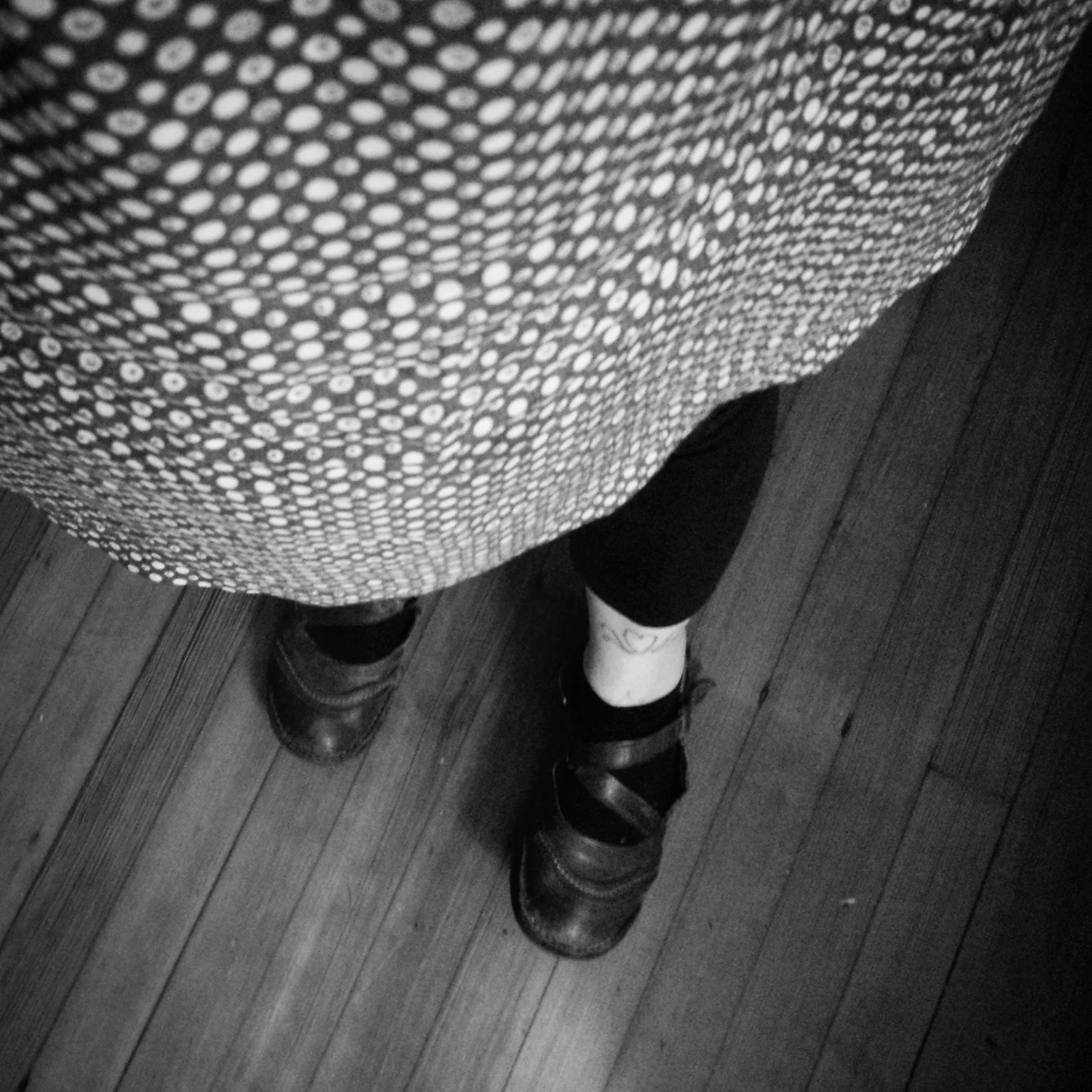
my dancing shoes
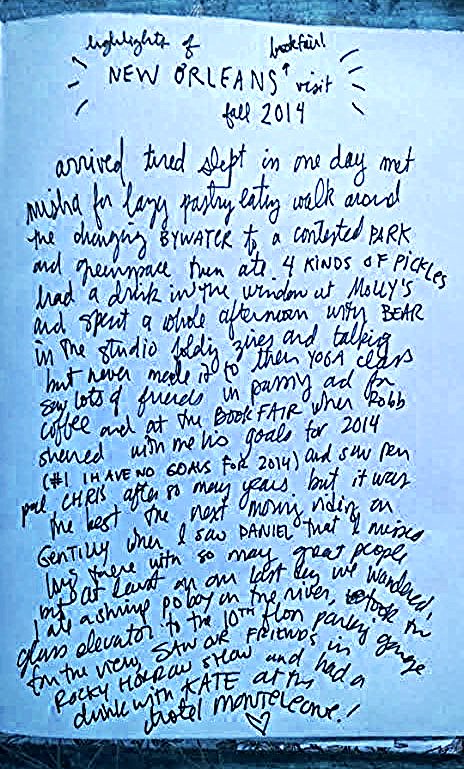
I brought a camera to New Orleans, I even checked the batteries before I packed it. And then it stayed in my bag for my entire visit. Most of the time, I wanted to just be with my friends, ride around, not answer the phone, not check my email. Aside from arranging meet-up times with busy friends, mostly it worked.
My first day in town, my friend Matt Runkle made a facebook challenge. Normally I ignore these, I duck in the internet corners so I don't get picked. But this one was about posting five black and white photos in five days. It was a challenge I was willing to participate in. I love color photos. Phone cameras and apps have improved, making it easier and easier to take lovely square images. I used to own a poloroid camera . The colors and instananeos nature of poloroid was appealing. Also the physical photo that emerged, to be tucked into a notebook, or glued to a journal cover. With all the instagram fanciness, it was nice to focus on composition with the same instant results. I took a few photos that didn't work in black and white, but here are the five I chose. I posted them on facebook but I thought they were nice all together. Maybe I will start taking more.
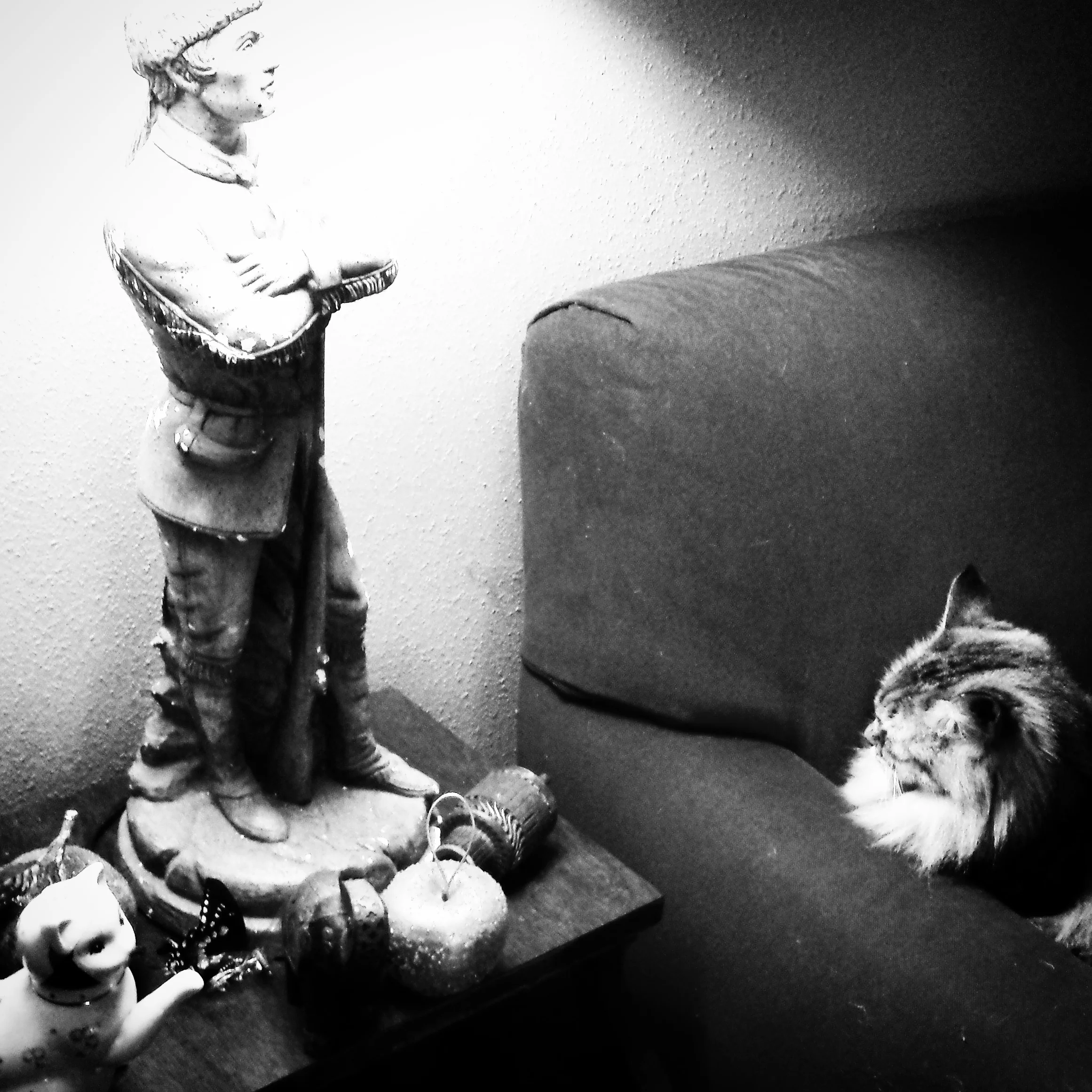
two against one.
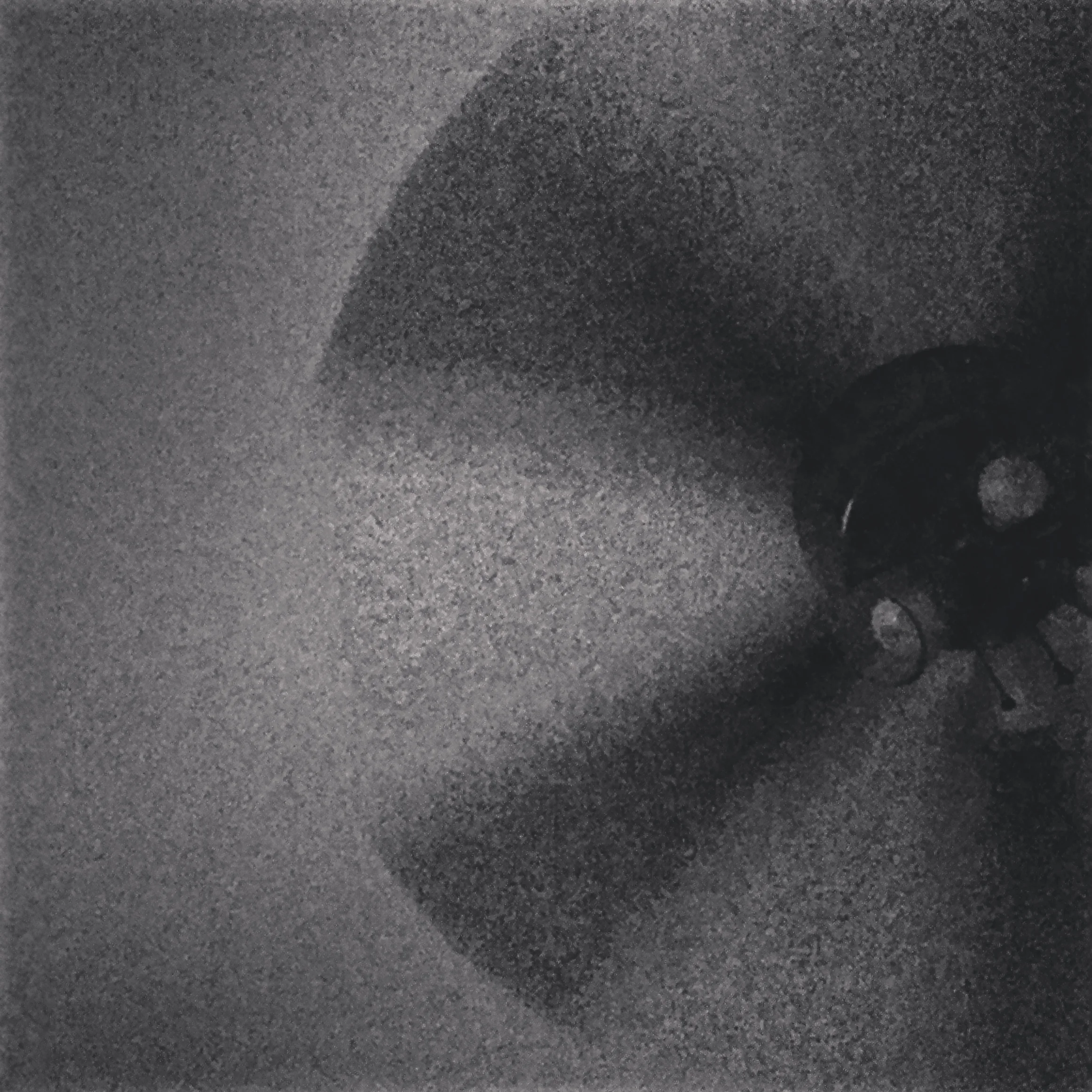
woke at 6 am.
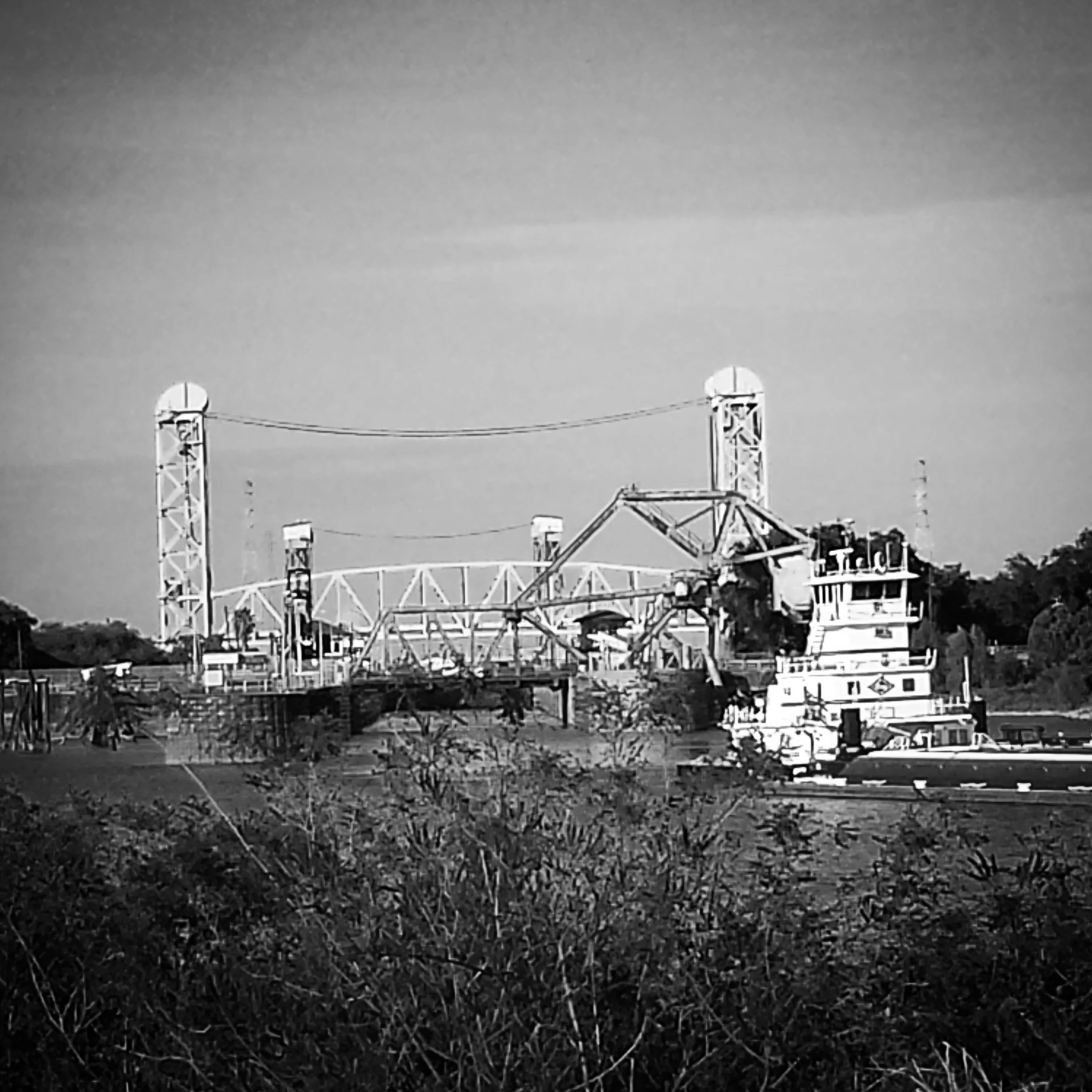
the industrial canal from the end of the world
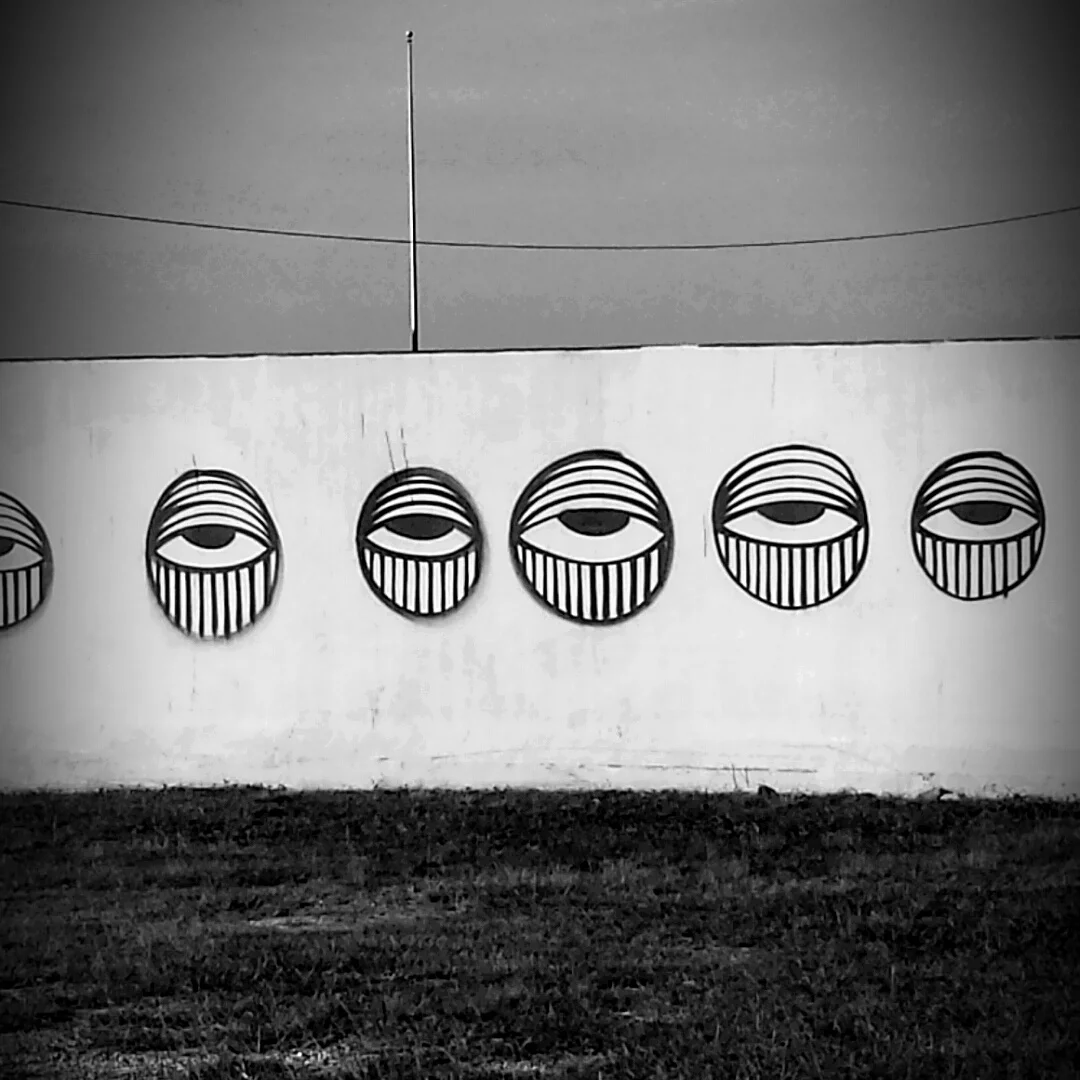
end of the world graffiti
city adventure
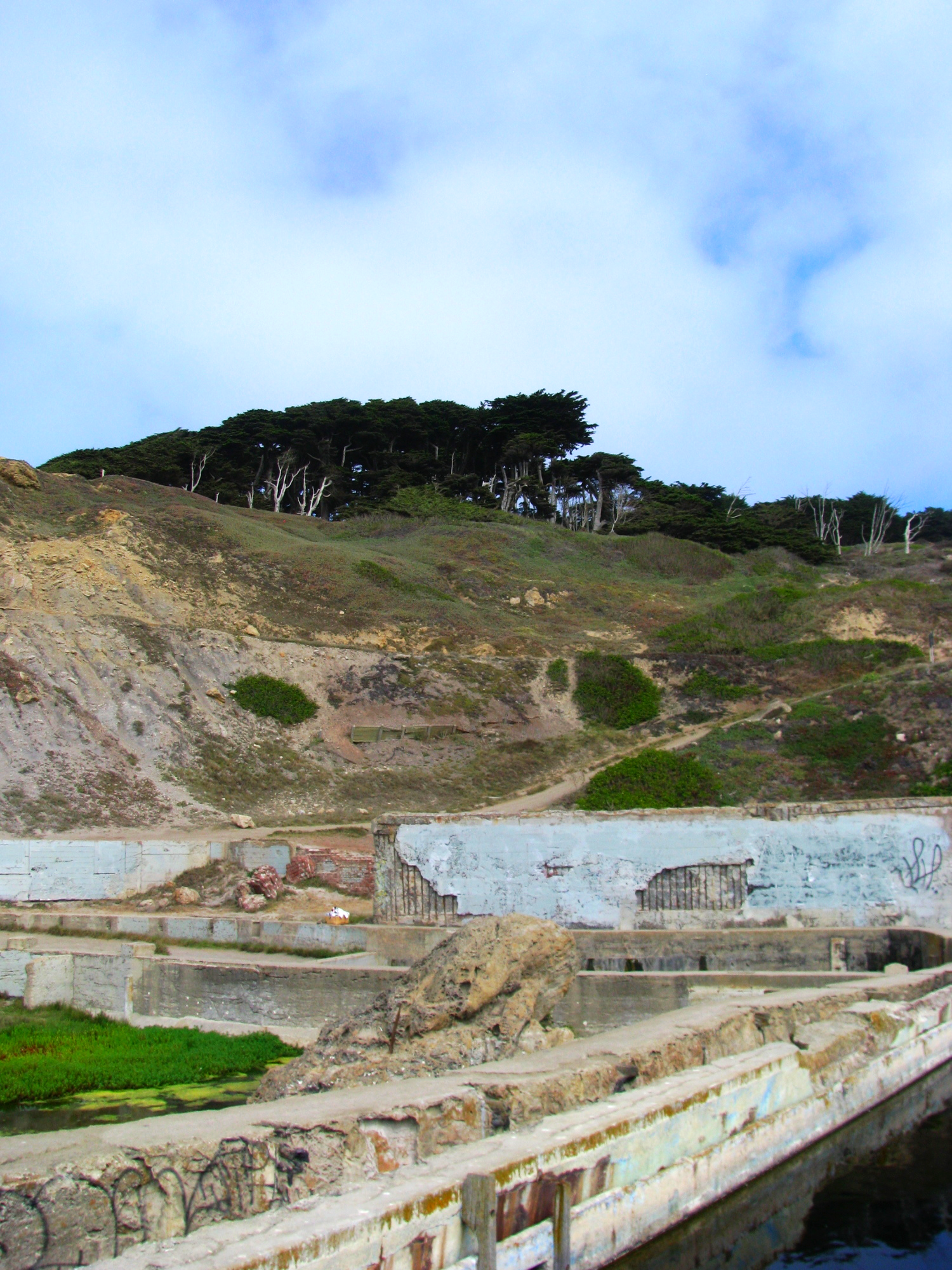
sutro baths from the bottom
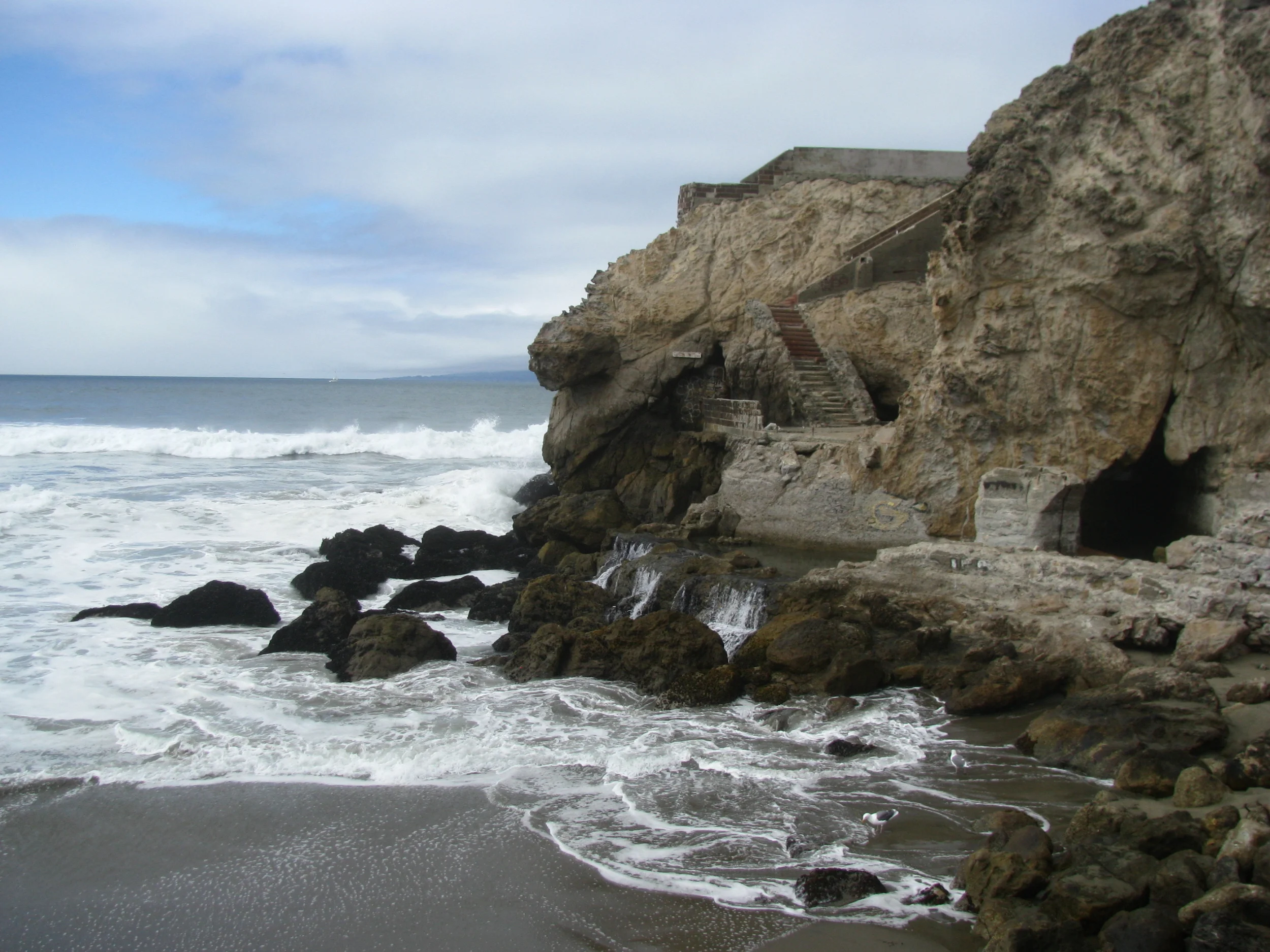
Most every day I would print or bind books or bake treats but luckiliy sometimes Andy reminds me to leave the house. A few weeks ago, we had a friend's car so we drove across the bay bridge and across the city all the way to the ocean. One amazing thing about California is the way they maintain so much of the coast as public land through national parks. You can be in San Francisco proper, not too far from the Golden Gate Bridge, walk to the ocean. We explored the ruins of Sutro baths, a former public bath house. You may not yet be aware of my love of swimming. More accurately, I enjoy soaking. I like lakes, oceans, public baths, hot springs and my giant clawfoot bathtub. Sutro baths burned down in the sixties, but you can still explore the ruins, listen to the tide crash through the pools, and buy 50 cent post cards. Sometimes you can go see punk shows in the caves, but the day we were there, we only witnessed an awkward german couple and a SF photographer taking boring photos of young women in bikinis.
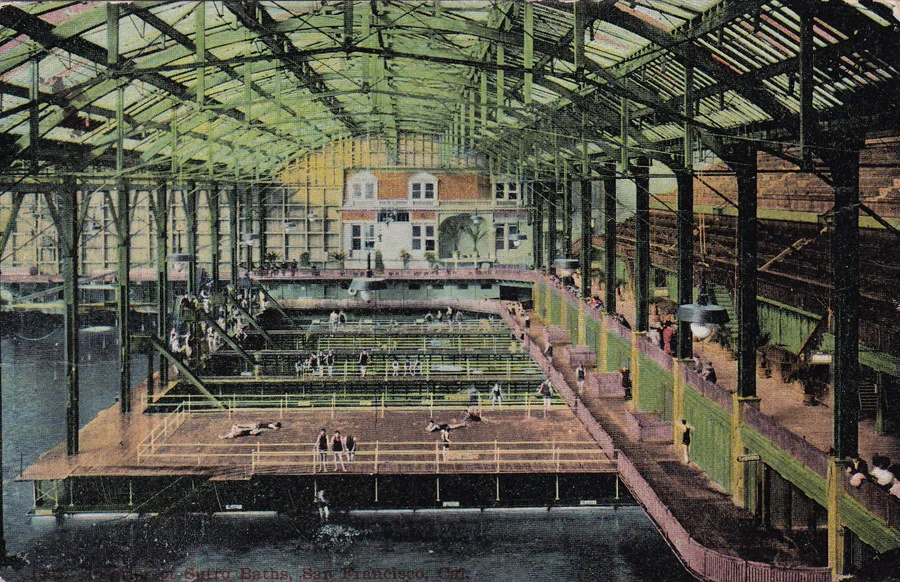
you can still buy these postcards. i already sent mine to a friend.
When you get tired of balancing on concrete ruins between pools of green water, you can hike to Land's End, see where part of Harold and Maude was filmed and see the ocean and the bay from a few amazing different points of view. We sat and watched the fog for a while. I was rooting for it to swallow the whole bridge but mostly what happened is that I sat still for a while, which almost never happens. Not bad for a a day out of the studio.
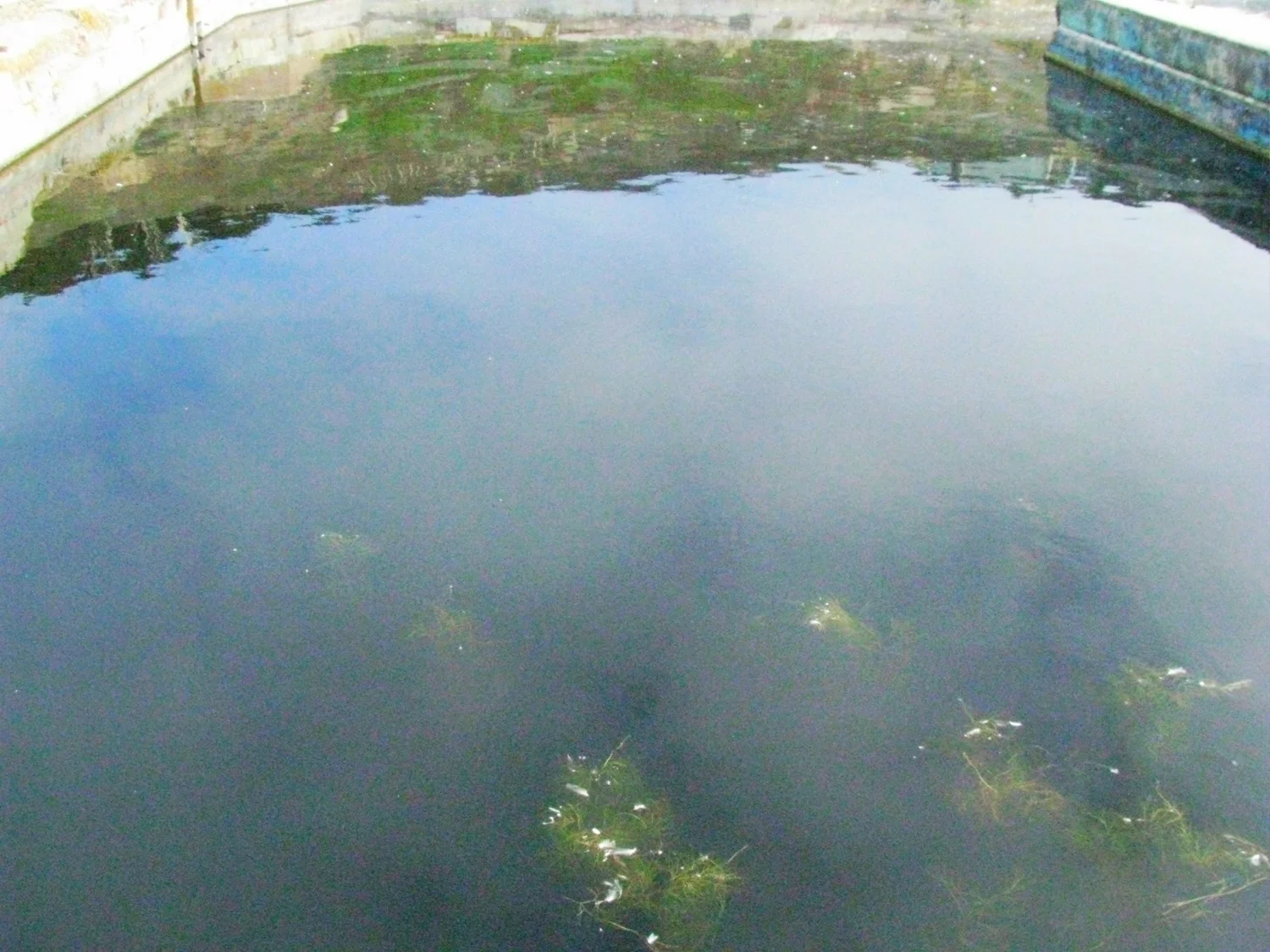
i might not swim in that anymore
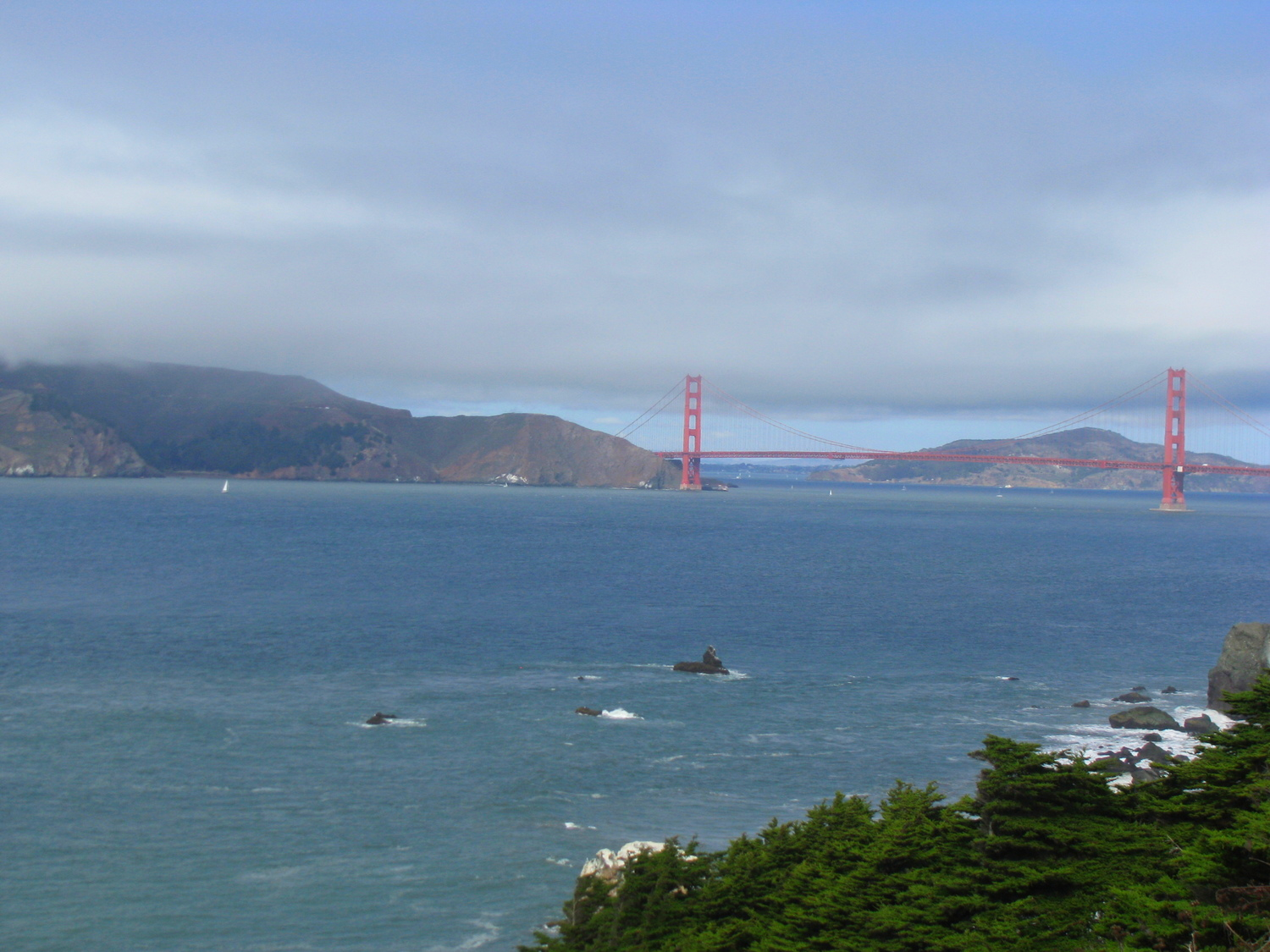
fog eating the bridge (photo by andy)
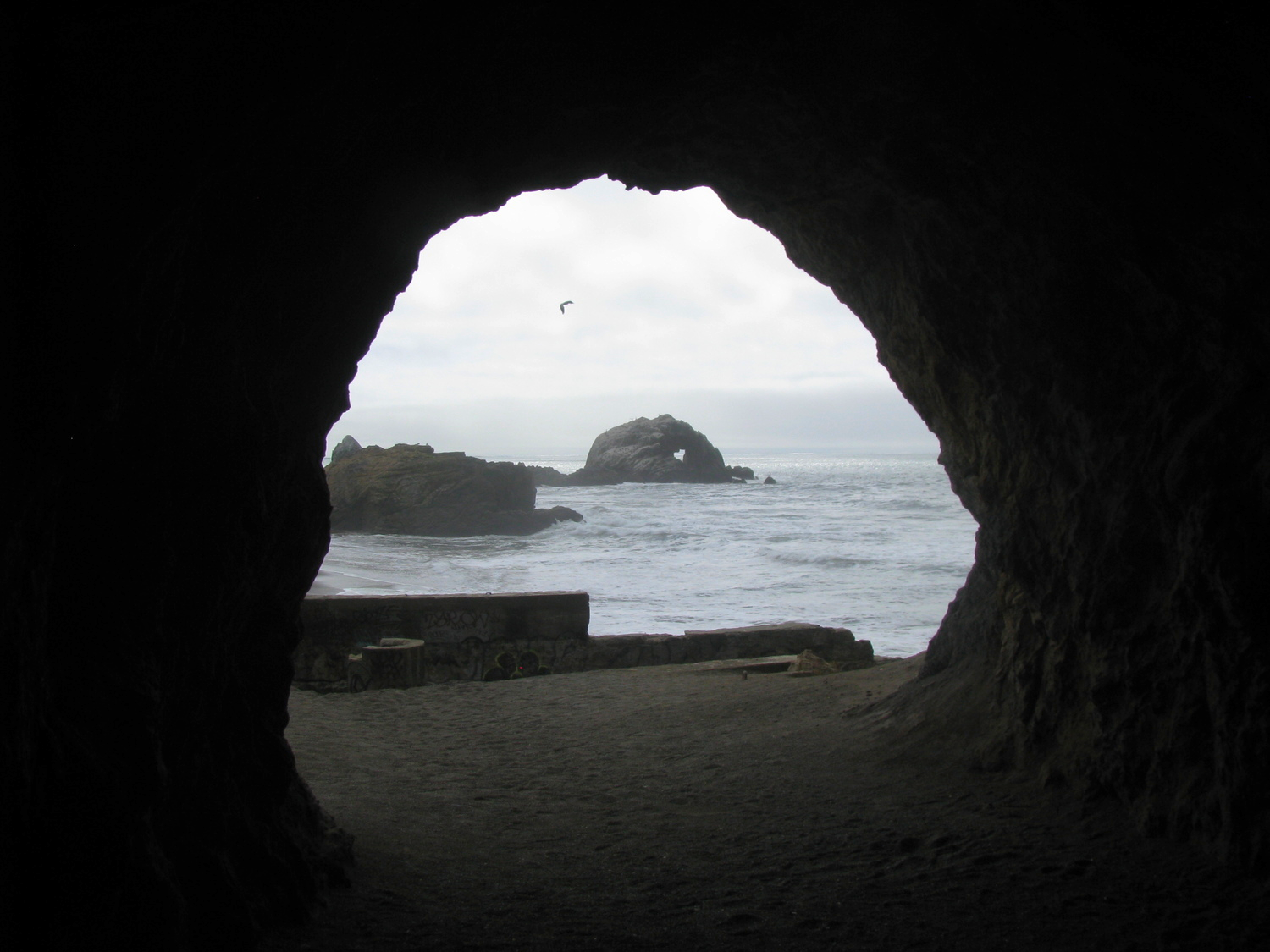
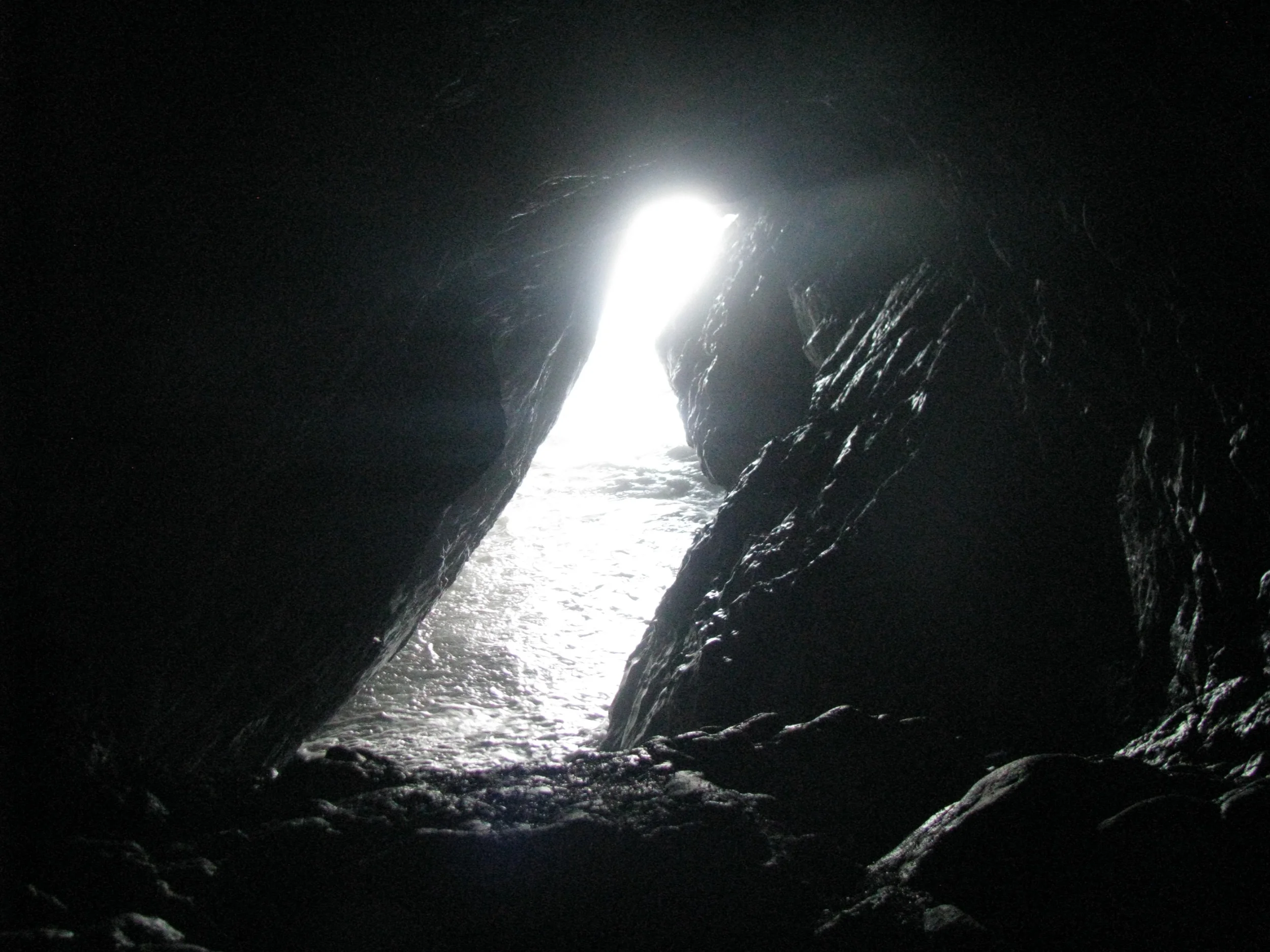
looking out from the cave (photo by andy)
this could be a movie set. wait...